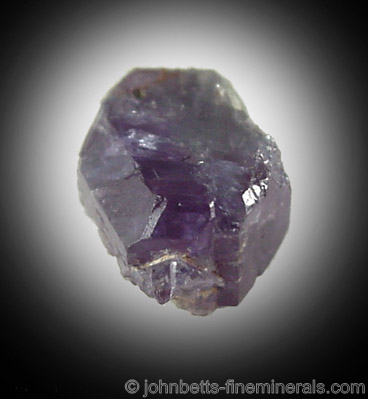
Alexandrite is a variety of Chrysoberyl the colour of which varies between dark grass-green and emerald-green. It was named after Czar Alexander II.
It displays a color change (alexandrite effect) dependent upon the nature of ambient lighting. It is green in daylight, and light red in artificial incandescent light. To accentuate this peculiar character the stone must be cut of a certain thickness, the difference in colour being much less marked in a stone cut with little depth.
Until comparatively recent times alexandrite was found only in Russia, in the emerald mines on the right bank of the Takovaya, a small stream east of Ekaterinburg in the Urals.
Synthetic Alexandrite
Synthetic alexandrite: Colour change - daylight: green to blue-green; incandescent light: red to violet-red. Transparent; Hardness 8.5; RI 1.740 - 1.756; Birefringence 0.007 - 0.010; Biaxial/+; SG 3.70 - 3.72; Pleochroism: red/orange-yellow/green; Inclusions: Flux method: flux and crucible (platinum) residues; Pulling method: slightly curved growth lines, black bubble-like inclusions; Hydrothermal method: swirl-like growth inhomogeneties, dark bubble-like residues, flat liquid inclusions; Fluorescence: SW and LW red - Gemmological Tables, Ulrich Henn and Claudio C. Milisenda, 2004, p 25 [37]